"Total False Propaganda": Aizaz Chaudhry Rejects Army Killing Claims

Abu Sufian
Diplomatic Editor
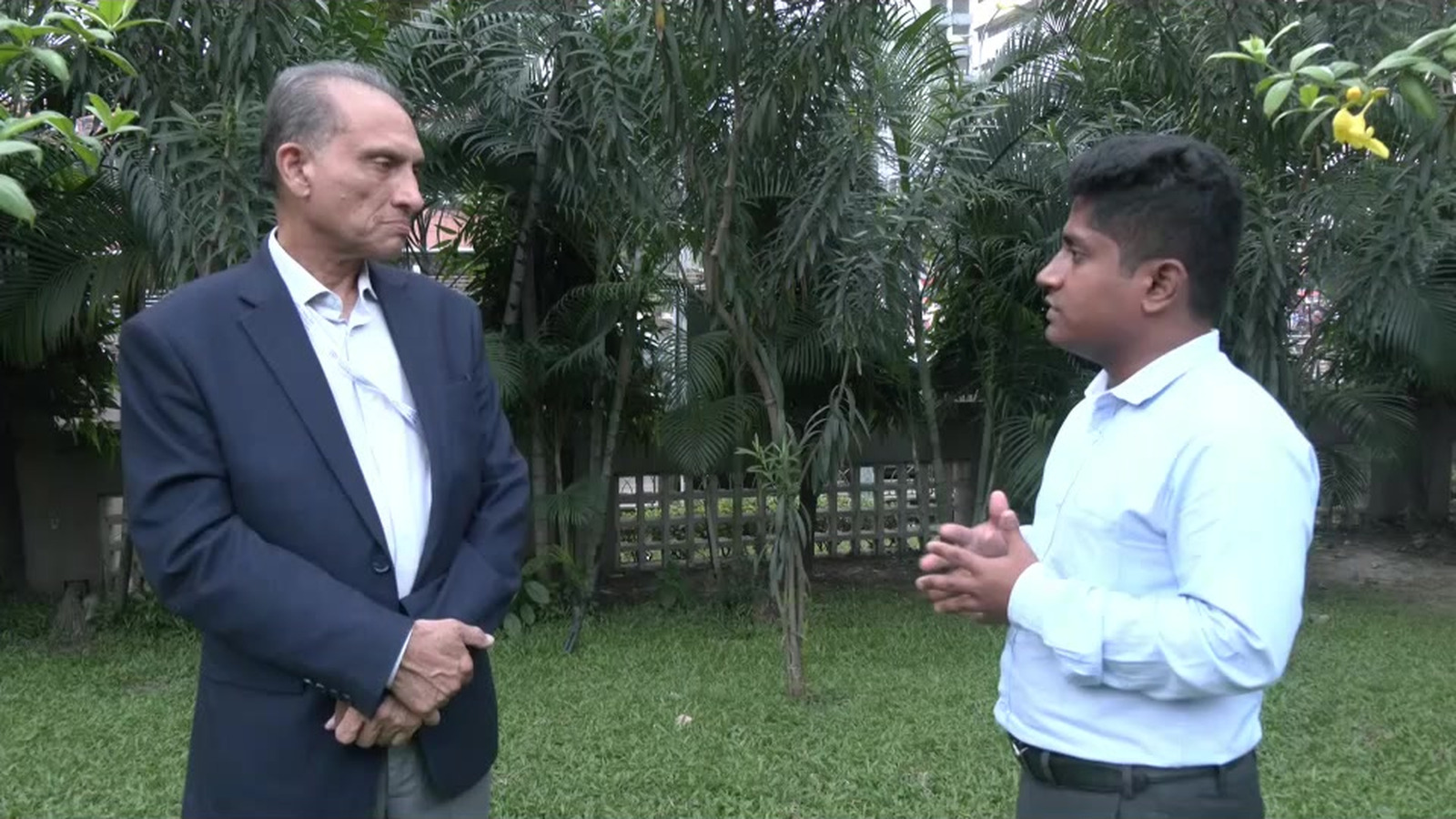
Photo: Asian Echoes
Pakistan's former foreign secretary rejects accusations that the army kills civilians and stifles dissent, but says public pressure for human rights helps governments.
Aizaz Ahmed Chaudhry, Pakistan's former foreign secretary, has dismissed reports that Pakistan's army is killing its own people as "total false propaganda". He also rejected claims that the country's security forces answer to no one and will not tolerate the opposition.
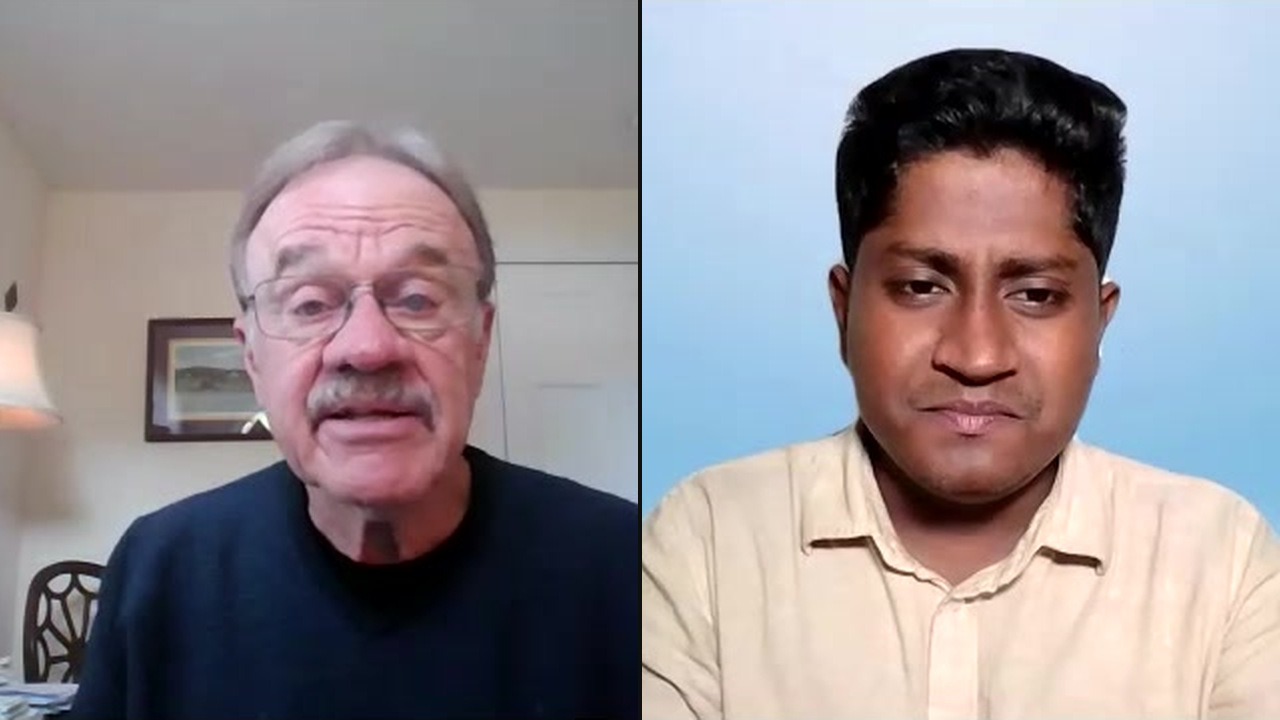
Human rights in Pakistan came up again and again when he spoke in Dhaka in an interview with Abu Sufian. Chaudhry agreed that a public more aware of its rights was "good". But he would not accept that the army, the police or the law enforcement agencies acted without accountability.
"I don't share that perspective. I don't know who talked to you," he said.
Fear and the power of the people
Abu Sufian asked him about the fear he had seen during a visit to Islamabad and two cities in Pakistan. People there, he said, feared the military and felt their human rights were not protected.
Chaudhry did not deny that such views exist. He called public pressure healthy and pointed to Bangladesh's own recent upheaval.
"All governments need some advice from the people. And in your own country, last year you saw what a big change it brought. The power of the people is good," he said.
"In Pakistan also, I think there are people who talk about improving human rights, and they have their views on relations with India, relations with Afghanistan, relations with United States, and I think all these public voices help the government to make the relationships according to the wishes of the people."
"Total false propaganda"
His tone hardened when Abu Sufian asked about reports from human rights groups and media outlets that the Pakistan army was killing Pakistani people.
"That is total false propaganda," Chaudhry said.
Abu Sufian pressed further. He asked how Chaudhry could deny it when Pakistani citizens and politicians had told him that the police, the army and the law enforcement agencies "don't have any accountability to the people" and were "killing common people".
Chaudhry answered that the army comes from the very people it is accused of harming.
"From every house in Pakistan there is somebody in the army. My own brother is also in the army. So this is very common," he said. "They are not somebody from outside. So I really don't accept this kind of argument."
He allowed that individuals do commit abuses, and said the system deals with them. "Of course there are some bad people in every society who want to exploit everything, and they are dealt with by the courts of Pakistan."
Opposition, Imran Khan and terrorism
Abu Sufian asked whether the people's mandate mattered in Pakistan. "Of course they do. There has been a democratic process which is continuously running. And even today there is an elected government," Chaudhry said.
Abu Sufian then asked about former prime minister Imran Khan, who has been in jail for three years. Chaudhry said Khan's fall was a matter for parliament.
"He was voted out of confidence, you know, there's a no-confidence move in the parliament. He lost the majority vote," he said. "Now there are certain cases against him which he is pursuing in the courts of Pakistan."
Abu Sufian recalled Bangladesh's grim human rights record during Sheikh Hasina's 17 years in power. He said he had seen the same in Islamabad. He asked why Pakistan's security forces were "not tolerating opposition and not listening to the people".
"I don't think this observation is correct. I think you may have met some people who have their own views," Chaudhry replied. "My own view is that this is not true."
The police, law enforcement and the army, he said, were working with the people "to eliminate terrorism". He said two of Pakistan's provinces were suffering from terrorism that comes from Afghanistan, and accused India of sponsoring it.
"We are victim of terrorism, and then we face the propaganda that we are doing terrorism to our people. This is not correct," he said.
1971, Balochistan and the media
Abu Sufian's final question was a blunt one. Some Pakistanis he met in Islamabad believed the army had split Pakistan in 1971 and was now doing the same in Balochistan. He asked Chaudhry for "a fact-based answer", not a diplomatic one.
"Well, I am a diplomat. All my life I have been a diplomat, and therefore you should expect that I will give an answer which will be diplomatic," Chaudhry said.
He spoke of "a lot of negative propaganda" that "affects the minds of many others", and urged the journalist "to reach out to all perspectives".
"I think 1971 was a tragic period, and we should be able to rise from that tragedy and make this relationship much better, much more beneficial for the people of the two countries," he said.
Abu Sufian also asked about press access. Pakistan's foreign and home ministries, he said, had refused his team visas to cover US Vice President JD Vance's visit to Islamabad for talks this year. Bangladesh, by contrast, had let at least 50 Pakistani journalists cover and observe its election. He asked whether Pakistan was afraid of independent media. "Not at all, not at all," Chaudhry said.
"If you want to improve relations between Pakistan and Bangladesh, you should give a full comprehensive perspective," he added.
SAARC and collective security
Away from human rights, Chaudhry was upbeat about ties between Dhaka and Islamabad. "I am very optimistic about Pakistan's relations with Bangladesh," he said, describing the two nations as "very friendly people and brotherly people".
He saw room for cooperation on defence as well. "Bangladesh and Pakistan can cooperate on military terms to advance our common goal of collective security," he said.
Asked whether SAARC could be revived, Chaudhry noted that the South Asian Association for Regional Cooperation "was created here in Dhaka in 1985". The bloc has been frozen since India refused to attend the summit due in Pakistan in 2014.
"At this moment, India is not keen to revive SAARC because it is to be held in Pakistan," he said. He argued that India's global ambitions depend on its neighbours. "If you cannot have your profile in the region, then you cannot have your profile at the global level."
"I hope that Bangladesh's effort to revive SAARC will succeed one day and India will see reason to promote not only the interest of India but also the whole region," he said.