UN Says ICJ Rohingya Genocide Ruling Is Binding and Final

Our desk
Desk
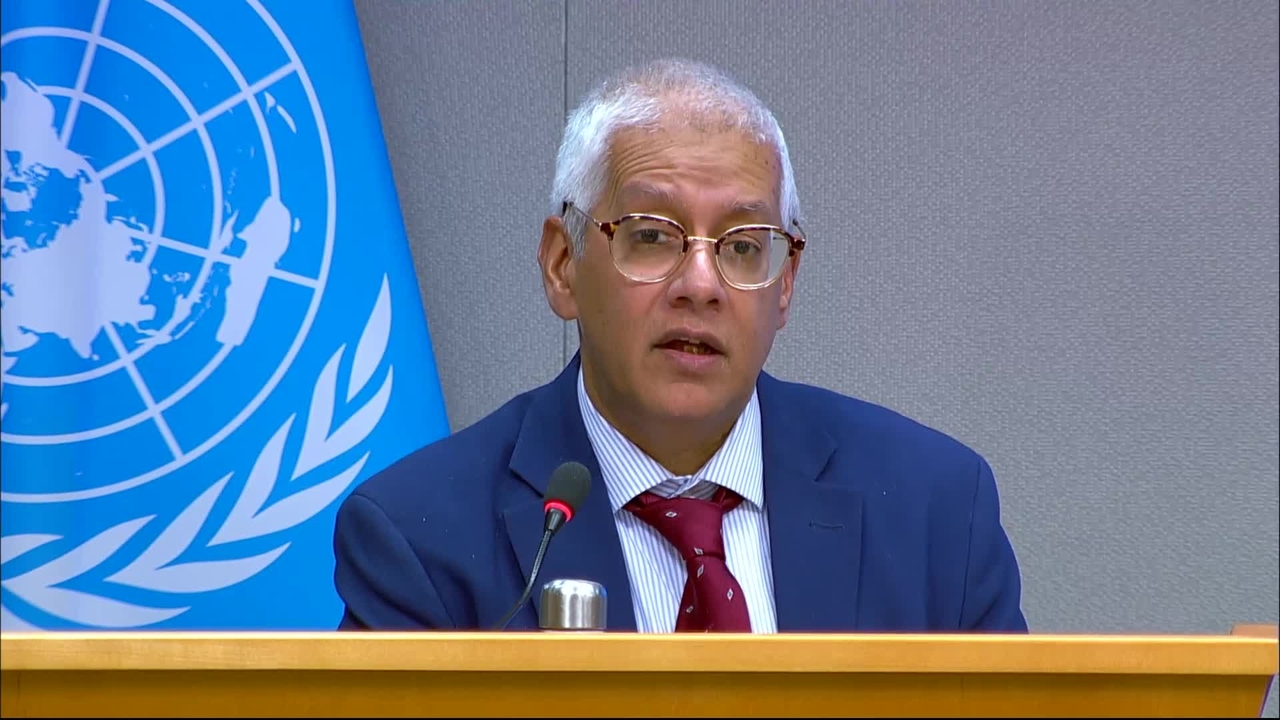
Photo: UN Web TV screengrab
The International Court of Justice ruling that Myanmar committed genocide against the Rohingya is "binding, final, and without appeal," the United Nations said on Thursday, as Secretary-General António Guterres urged Myanmar to comply with the judgment in full.
Briefing reporters at the UN daily briefing in New York on 19 November, Deputy Spokesman Farhan Haq said the Secretary-General had welcomed the Court's judgment in The Gambia v. Myanmar case as "a powerful recognition of the Rohingya victims of genocide" and "a reaffirmation that impunity for such horrific acts must not stand." It is the first time the Court has found a State responsible for committing genocide.
According to the Secretary-General, Myanmar must cease any ongoing violation of the Genocide Convention by enacting appropriate legislation; investigate, prosecute and punish perpetrators; provide assurances and guarantees of non-repetition; and provide adequate, effective and prompt reparation to the Rohingya, including through their safe, voluntary and dignified return and the reunification of families. He also urged the international community to support the efforts of his Special Envoy on Myanmar, Julie Bishop, to reach an inclusive political solution that addresses the root causes of the Rohingya crisis.
Asked what the UN or the international community could do to make Myanmar comply, Haq said: "Certainly the nations of the world can all put their combined pressure on Myanmar to abide by the ruling of the Court." He noted that the Secretary-General had pressed the issue at the recent ASEAN Summit in the Philippines, adding that "there was a lot of support from ASEAN for the goals that we are setting for Myanmar."
Haq said the Court "relied extensively on UN documents," in particular the work of the Independent International Fact-Finding Mission on Myanmar and the Independent Investigative Mechanism for Myanmar, both established by the Human Rights Council. Whether the Security Council takes further action, he said, "that's certainly up to the Security Council to decide," noting that Myanmar is on its agenda.
Shenzhen summit
Responding to questions about the trilateral summit of the leaders of the United States, Russia and China in Shenzhen, Haq said the UN welcomed the reaffirmation in their joint declaration "that a nuclear war cannot be won and must never be fought." On the leaders' support for UN reform, he said the Secretary-General has himself been pushing for reform through the UN80 initiative, and "we're pleased that many of the key countries on the UN Security Council are also engaged in trying to pursue reform here."
Asked about reports that the three leaders had agreed to curb the International Criminal Court, Haq said the Secretary-General "believes that the International Criminal Court is one of the crucial bodies for international justice in the world," adding that the rule of law "must be reinforced and not weakened."
Peacekeeper paternity claims
Haq also announced new accountability measures to support children fathered by peacekeepers. Since 2006, the UN has received some 800 paternity or child support claims involving peace operations personnel, around 500 of which remain unresolved, including 400 where paternity has yet to be determined. The Secretariat will now consider Member States' efforts to investigate and determine paternity when assessing troop- and police-contributing countries, and these assessments may inform future deployment decisions.
Gaza, Lebanon and Yemen
In Gaza, the Office for the Coordination of Humanitarian Affairs said hundreds of people displaced in Nuseirat and Al Bureij were gradually returning after the end of an Israeli military operation in Deir al Balah. Heavy rain and flooding earlier this month affected some 200 temporary learning spaces, nearly one third of those operating in Gaza. Just over 35 per cent of this year's $4.1 billion appeal for Gaza and the West Bank has been funded.
In southern Lebanon, the UN Interim Force in Lebanon (UNIFIL) recorded a daily average of about 35 air violations between Monday and Wednesday, mostly by drones, and about 90 artillery trajectories a day, while peacekeepers continued to face restrictions on their movement.
On Yemen, Haq said that while he had no travel plans to announce for Emergency Relief Coordinator Tom Fletcher, the country "remains a top priority" for him. More than 350,000 people have been forced from their homes since August, and Fletcher continues to press for humanitarian access and the release of detained UN staff and other humanitarians.
Sudan and Kenya
In Sudan, the International Organization for Migration reported that airstrikes displaced more than 2,500 people this week from Abu Galib village and the town of Abu Zabad in West Kordofan. In northern Kenya, the World Food Programme said about 30,000 people have sought safety in Moyale after fleeing violence in neighbouring Ethiopia.
Haq also noted that UN High Commissioner for Human Rights Volker Türk called on governments and tech companies at the RightsX Summit in Geneva to make human rights "the quality-control test for every AI product before its release," and marked World Toilet Day, with the Secretary-General calling sanitation a universal human right.