Nahid Wants Action, Not Talk, After PM Meeting

Our desk
Desk
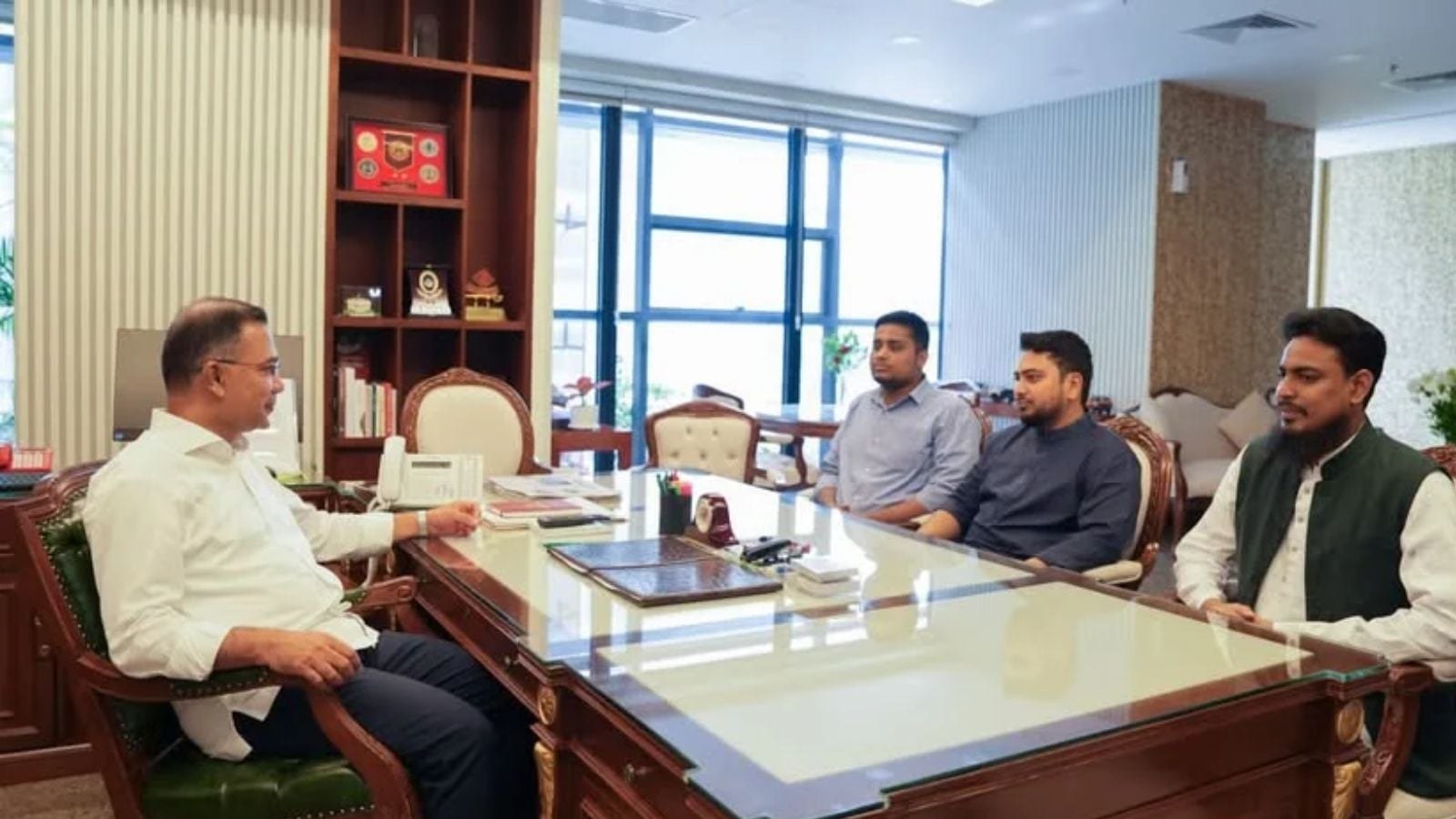
Photo: PMO/Facebook
National Citizen Party (NCP) convener Nahid Islam has said his party will judge its unity talks with Prime Minister Tarique Rahman by what the government does next, after the two sides met at the Secretariat in Dhaka on Monday.
“We do not want discussions merely for the sake of discussions. We want dialogue to continue, but we also want to see what steps the government takes to make it fruitful,” Nahid, who is also the opposition chief whip, told reporters after the meeting.
“If the government takes action and tries to earn the trust of the people and political parties, we can then say the meeting was successful,” he added.
The four-member NCP delegation, which also included member secretary Akhter Hossen, senior joint convener Hasnat Abdullah and joint convener Akram Hossain, spent about 40 minutes with the prime minister before a lunch he hosted.
The meeting was the first in a series the government has planned with political parties to build national unity against the activity-banned Awami League, whose supporters have been blamed for a wave of arson and bomb attacks ahead of ousted prime minister Sheikh Hasina’s announced return from India.
Nahid said unity could not be built only around the current crisis. “This cannot be limited to December alone. We will have to deal with the Awami League and India issues in the coming days. Therefore, we need a long-term roadmap,” he said.
The NCP placed a list of proposals before the prime minister, including a full legal ban on the Awami League, a common foreign policy, faster trials over the July 2024 killings, stronger capacity for the International Crimes Tribunal and a firm stance in talks on renewing the Ganges water-sharing treaty, which expires on 12 December.
The party also called for the dissolution of the parliamentary committee on constitutional amendments, which it describes as a one-party body, and for lawmakers to take oath as members of the Constitution Reform Council so that the July Charter can be implemented in line with the referendum verdict.
Asked how the prime minister responded, Nahid said: “They said they would consider these matters. They want to continue the discussions.”
He denied that the NCP had laid down preconditions. “This is not a matter of conditions. The point is that if there is to be a process of national unity, it must have a foundation,” he said.
The Prime Minister’s Office played down the NCP’s account. Its spokesman Mahdi Amin said the party had set no conditions and that the talks covered national issues, including socioeconomic development, protection of local industries and job creation. He said the July-August uprising had already forged national unity and the task now was to consolidate it.
Amin added that the BNP government would implement the July Charter in full while respecting the notes of dissent. Meetings with other parties are expected to follow in phases.